
Ernest Shackleton Part I: When the Mission Changes, Leadership Matters Most
In 1914, Sir Ernest Shackleton set out to accomplish something no one had ever done: cross Antarctica on foot.
He never got the chance.
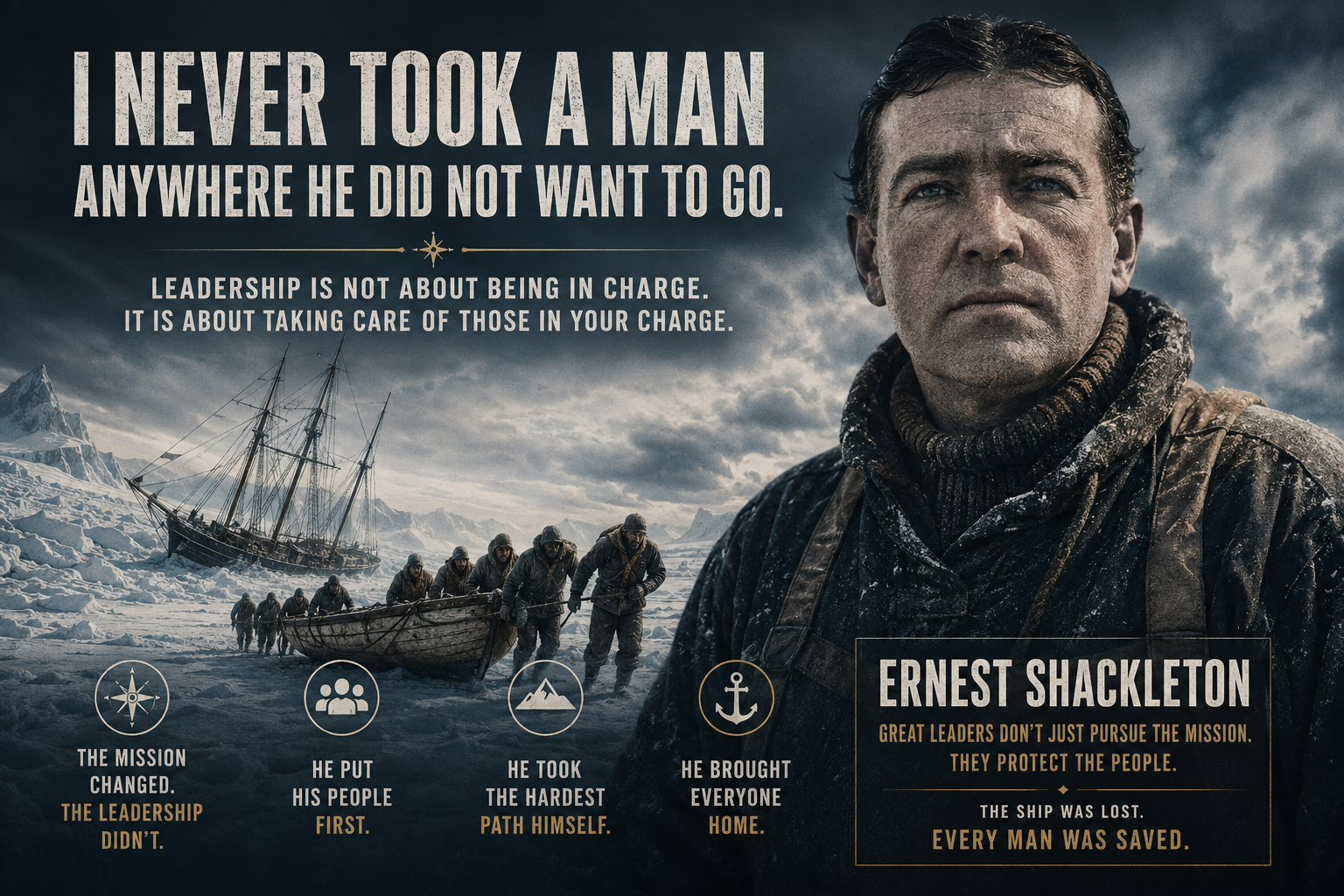
His ship, The Endurance, became trapped in the ice of the Weddell Sea. For months, Shackleton and his 27-man crew drifted helplessly with the frozen pack. Eventually, the ice pressure crushed the ship.
The expedition was over.
The leadership challenge was beginning.
Shackleton immediately understood something every leader eventually confronts: when circumstances change, the mission must sometimes change with them.
Crossing Antarctica no longer mattered.
Bringing 27 men home alive did.
He Put His People Ahead of the Original Plan
Shackleton abandoned the objective without abandoning his responsibility.
He managed food, routines, morale, and relationships carefully. He understood that despair could become as dangerous as the Antarctic weather.
He kept the crew occupied. He maintained discipline. He projected confidence even when the path home was anything but certain.
Leadership lesson: Great leaders know the difference between commitment to a mission and attachment to a plan.
He Took the Hardest Assignment Himself
After months stranded on the ice and then on remote Elephant Island, Shackleton made an extraordinary decision.
He and five others climbed into a 22-foot lifeboat, the James Caird, and attempted an approximately 800-mile journey across one of the most dangerous stretches of ocean in the world.
They reached South Georgia.
But they landed on the wrong side of the island.
So Shackleton and two companions crossed its mountainous, largely unexplored interior on foot to reach a whaling station and organize a rescue.
He didn't send someone else to solve the problem.
He went.
Leadership lesson: When the stakes are highest, leadership means accepting responsibility rather than distributing it.
He Refused to Leave Anyone Behind
Shackleton repeatedly attempted to return to Elephant Island. Ice and weather turned back multiple rescue efforts.
He kept trying.
On August 30, 1916, more than four months after leaving the stranded men, Shackleton finally returned.
Every member of the Endurance party survived.
Think about that.
The ship was gone.
The expedition had failed.
They had endured ice, hunger, freezing temperatures, open-ocean crossings, isolation, and enormous uncertainty.
Yet Shackleton brought every one of his men home.
The Leadership Lesson
We often judge leaders by whether they accomplish the original objective.
Shackleton's story suggests another measure.
What happens when the original objective becomes impossible?
Great leadership isn't simply driving harder toward the plan. It is recognizing when reality has changed, redefining success, protecting your people, and giving them confidence when you cannot promise them an outcome.
Shackleton set out to cross Antarctica.
He failed.
But when the mission changed from exploration to survival, he delivered something far more important:
He brought his people home.
