
Ernest Shackleton Part II: Optimism Is a Leadership Tool
The Power of Positive Thinking
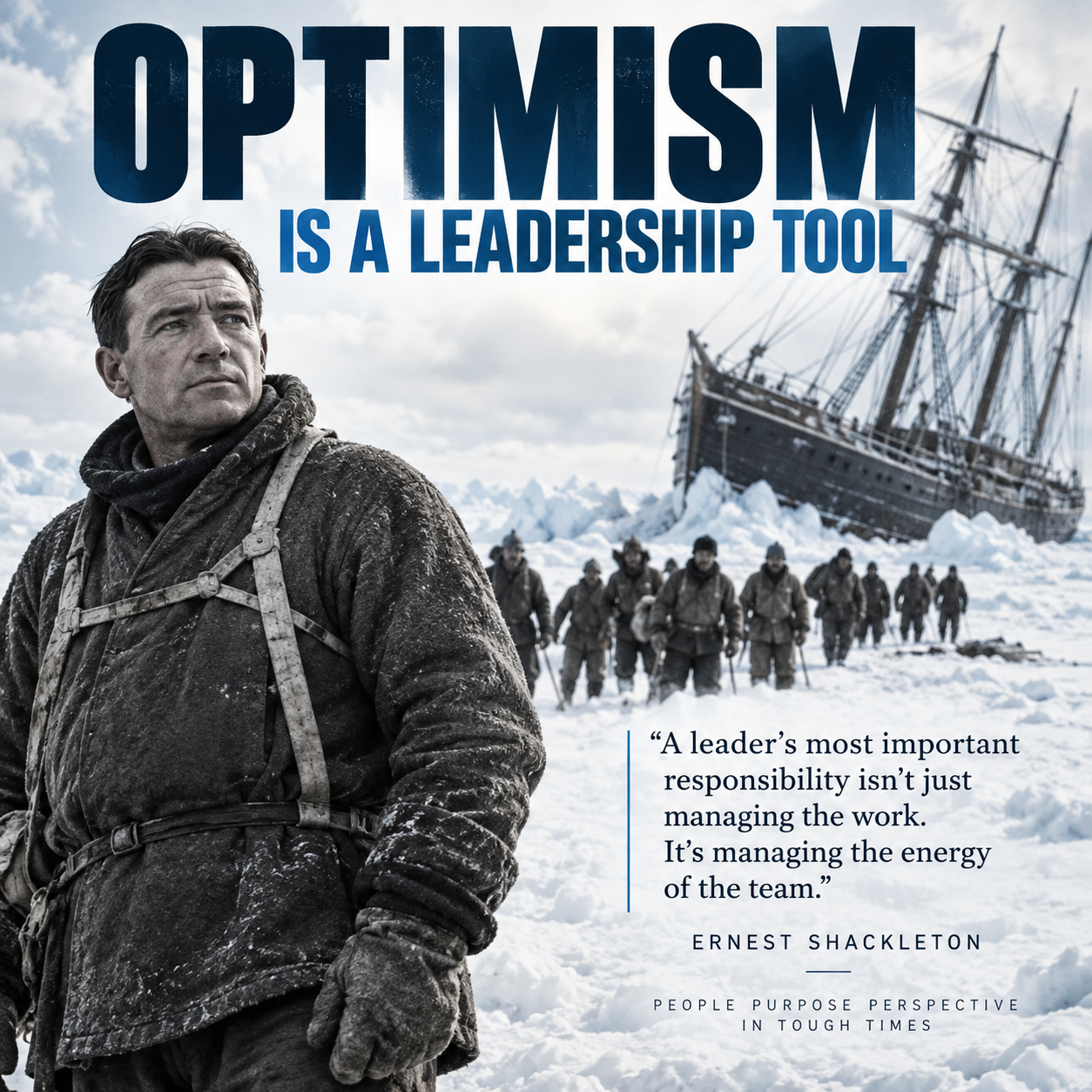
When Ernest Shackleton’s ship Endurance became trapped in Antarctic ice, the expedition’s original mission was over.
The new mission was simple: bring everyone home alive.
Shackleton couldn't control the ice, the weather, or the circumstances.
But he could influence something else: his team's emotional state.
He understood that fear, pessimism, and division could become as dangerous as the environment itself. So he worked deliberately to maintain routines, keep people occupied, build camaraderie, and project confidence—even when the outcome was uncertain.
Eventually, all 28 expedition members survived.
There’s an important lesson here for leaders: Optimism isn't pretending everything is fine.
It’s acknowledging the reality of the situation while believing there is still a path forward.
Great leaders don't just manage strategy, budgets, and execution.
They manage energy.
When circumstances get difficult, people look to the leader for signals.
Your team doesn't need false confidence.
They need a leader who can say: “This is difficult. The plan has changed, and we are going to figure it out.”
That's not unquestioning optThat's
That’s leadership.
#Leadership #LeadershipLessons #Resilience #Culture #Teamwork #ErnestShackleton
