
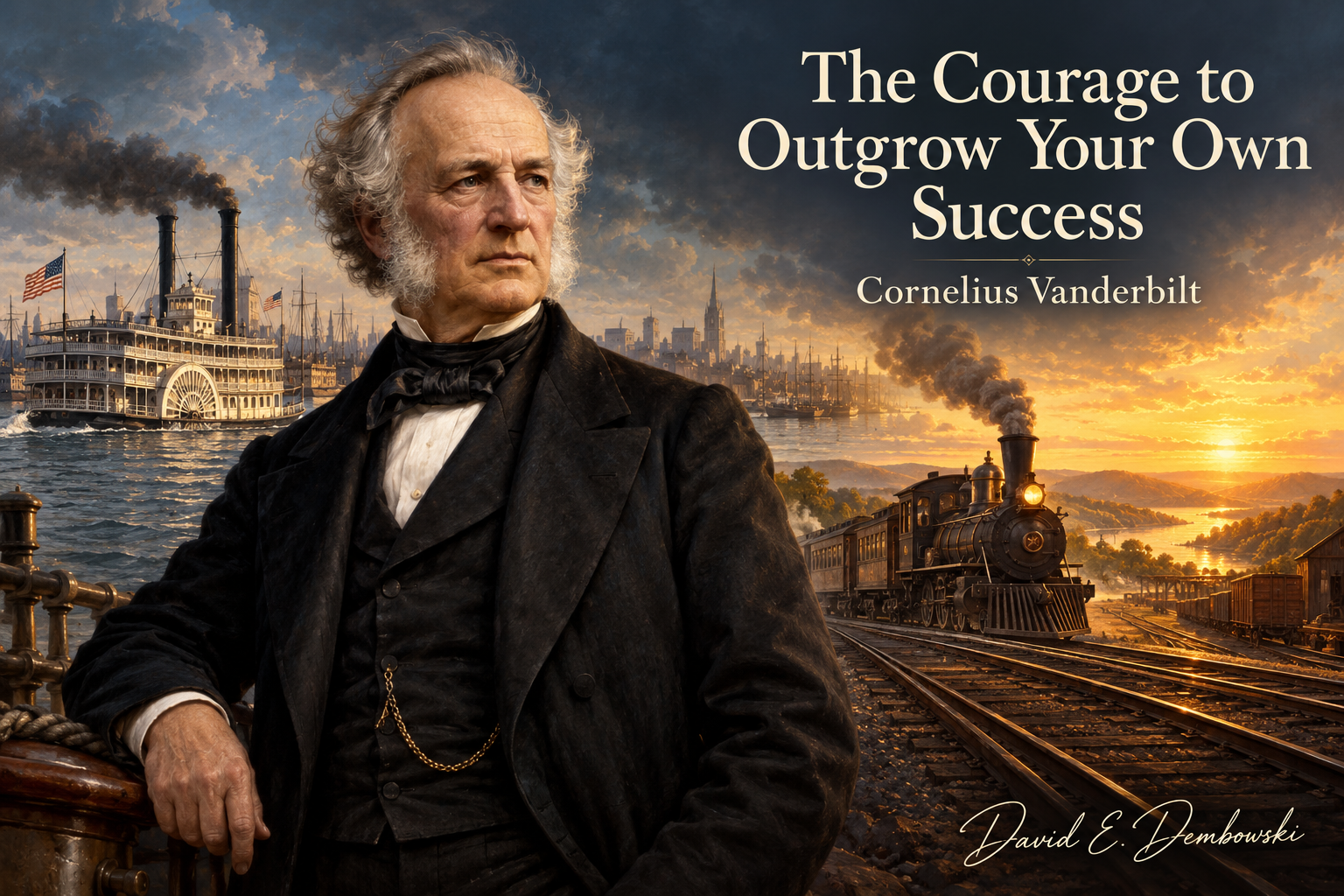
The Commodore
Cornelius Vanderbilt and the discipline to follow the opportunity
Success can make leaders reluctant to change. The business grows. The formula works. Experience reinforces confidence. Eventually, the approach that built the company becomes something the organization feels compelled to protect. Cornelius Vanderbilt’s career offers a useful lesson in recognizing when to move beyond it.
Known as “the Commodore,” Vanderbilt built his early fortune in water transportation. Yet in the 1860s, after decades in shipping, he shifted his focus toward railroads and built another business empire. The leadership lesson is this: a successful past does not eliminate the need to bet differently on the future.
Understand the business beneath the product.
Vanderbilt’s move from ships to railroads reflects a shift in how he met an enduring need: moving people and goods. The vessels and tracks were different. The underlying demand was connected.
That distinction matters for leaders today.
A media company serves audiences and advertisers across changing distribution forms. A software company solves customer problems as technology changes. A retailer helps people discover and purchase products through new channels.
When leaders define their businesses too narrowly, they risk confusing the current delivery method with the value customers actually want.
Ask yourself: What customer need would remain if our current product disappeared?
Make your priorities visible in your investments.
Recognizing an opportunity is only the beginning. Leaders must decide what they are willing to commit. Vanderbilt’s railroad expansion involved taking control of major businesses, including the Hudson River Railroad in 1864 and the New York Central in 1867. His shift became visible through ownership and investment.
Modern organizations often describe transformation more confidently than they fund it. They announce a new direction while keeping budgets, incentives, talent, and executive attention concentrated on the existing business. A strategy becomes credible when those choices begin to change.
Your organization learns your priorities from what you fund, reward, and measure.
Separate strategic courage from ruthless conduct
Vanderbilt is a complicated leadership example. His career included aggressive competitive tactics and bitter struggles for control. Business success alone does not make someone a model for how to treat people. We can study his willingness to change direction while applying a broader standard to our own leadership. Decisiveness needs accountability. Ambition needs judgment. Competitive strength needs boundaries.
The question is not only whether a decision creates value, but how it creates that value.
Stay committed to the purpose, and willing to change the approach
The hardest moment to reconsider a business may be while it is still successful. Customers need serving, results to deliver, and people whose livelihoods depend on the current model. Those responsibilities make change difficult. They also make thoughtful preparation essential. Vanderbilt's career invites a question every leader should consider:
Are you building toward the next opportunity, or protecting your last success?
Experience should improve our judgment. It should also help us recognize when the assumptions behind that experience have changed. Sometimes, leadership means having the courage to outgrow the business that made you successful.
