
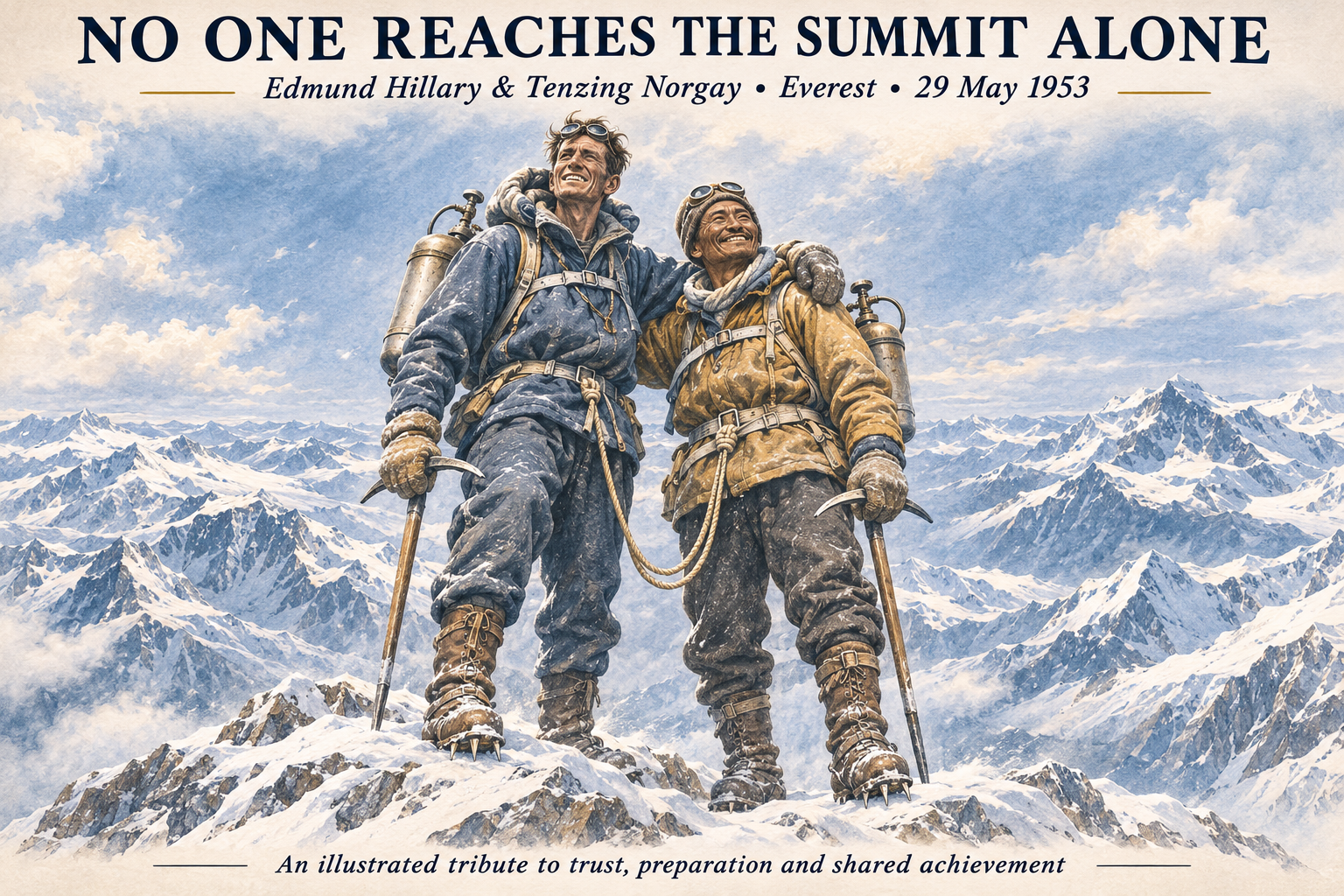
Extraordinary success rests on preparation, trust, and shared effort.
Edmund Hillary, Tenzing Norgay, and the trust behind extraordinary achievement
On May 29, 1953, Edmund Hillary and Tenzing Norgay became the first climbers confirmed to reach the summit of Mount Everest. Their achievement joined two names in history and reflected the work of a much larger expedition. We remember the summit because it is the moment we can see. But the leadership lesson lies in everything required to get there: preparation, complementary expertise, shared responsibility, and trust.
Extraordinary goals require people who can depend on one another when the consequences become real.
Respect the expertise beside you
Hillary brought formidable climbing ability. Tenzing brought extensive Himalayan experience and mountaineering skill. Their partnership helped make the final ascent possible. For leaders, the application is direct: recognize expertise wherever it sits. The person closest to the customer, the operation, or the problem may see something you cannot. Your responsibility is to make room for that knowledge and let it shape the decision.
A strong team gives people influence because of what they know and contribute.
Build trust before pressure tests it
On a mountain, dependence on another person is tangible. In business, it can be easier to overlook until a major customer is at risk, a launch falls behind, or a difficult decision exposes competing priorities. By then, building trust becomes harder. Leaders build it through everyday behavior: keeping commitments, admitting uncertainty, listening carefully, and addressing problems early. Those habits give teams a foundation when circumstances become difficult.
Recognize everyone who made the summit possible
Hillary and Tenzing stood at the top, but the expedition depended on planning, supplies, route preparation, and the effort of many others. Their achievement was a team accomplishment. Organizations have their own summit moments: the contract signed, the product launched, the growth target achieved. Behind each one are people whose contributions may never appear in the announcement.
A leader's responsibility includes making that work visible. Recognition tells the organization what you value, and whether shared effort will receive shared credit.
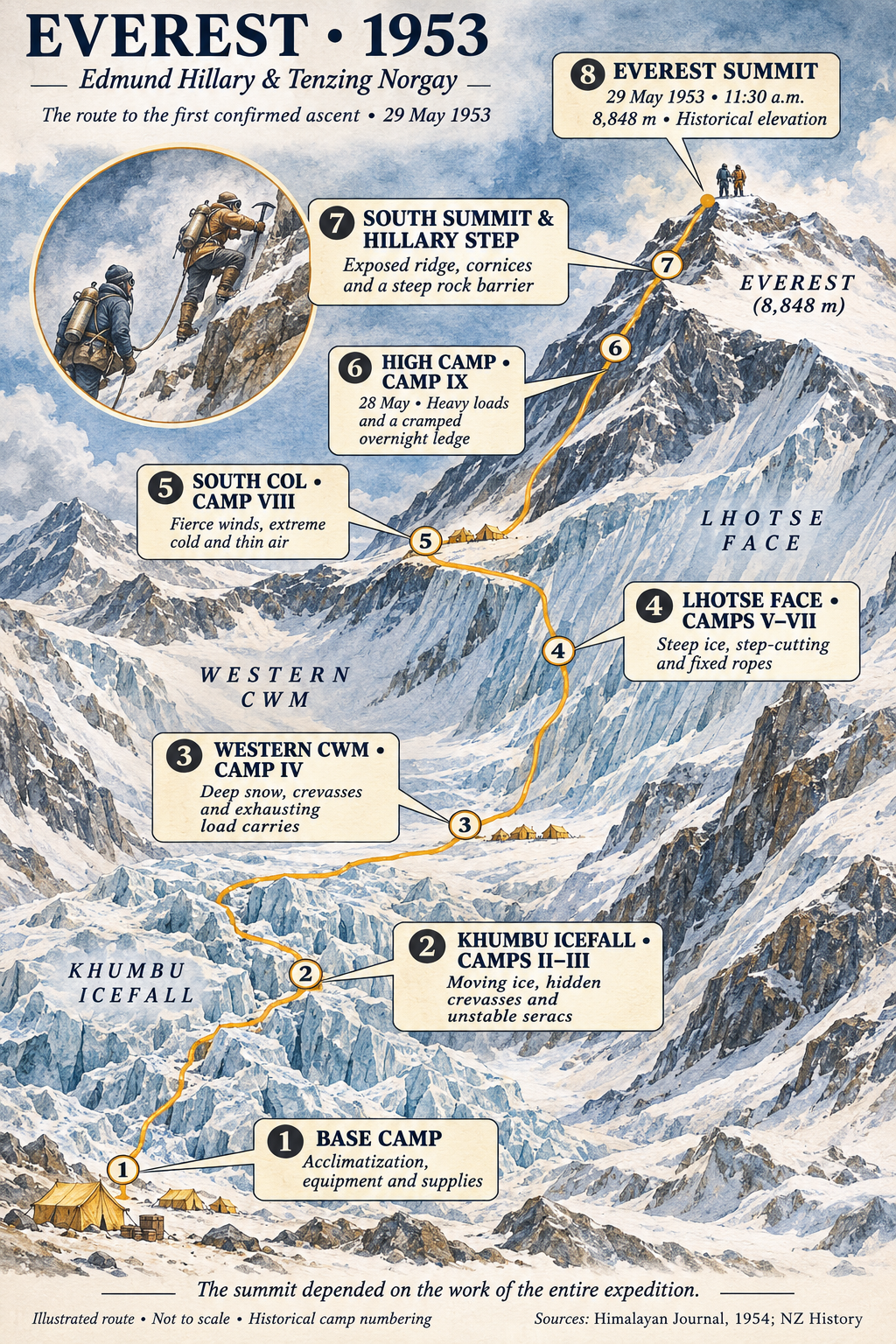
Success is not a straight line.
The leadership lesson
Hillary and Tenzing's achievement raises a practical question:
Have you built a team whose members trust one another enough to pursue something difficult together?
Ambition sets the destination. Preparation gives the team a chance. Trust allows people to move forward together. And when the summit comes into view, remember everyone who helped you reach it.
