
The Winter That Built an Army
December 19, 1777
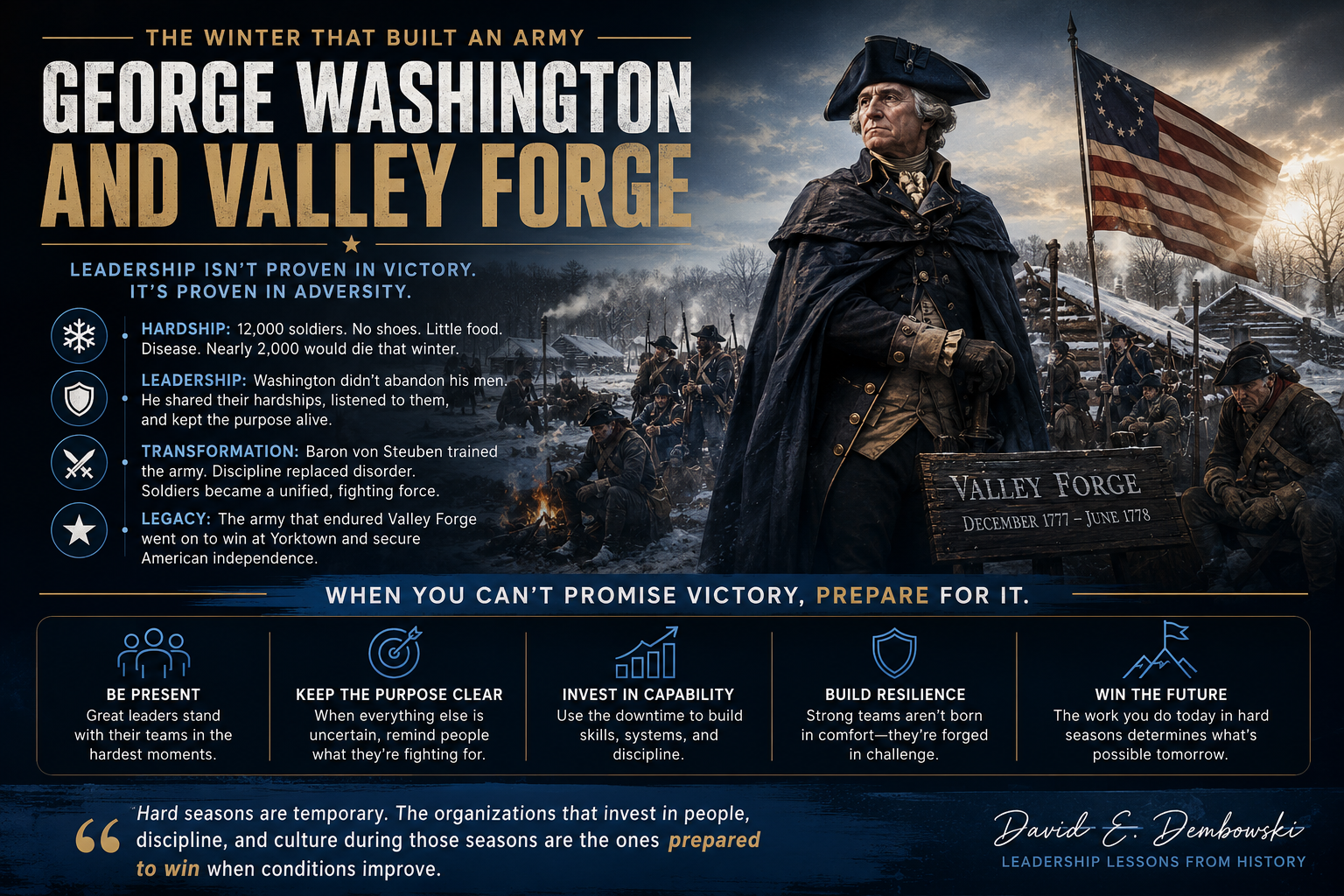
George Washington marched roughly 12,000 soldiers into Valley Forge, Pennsylvania. They weren't marching toward victory. They were marching toward survival.
The Continental Army had just suffered a string of defeats. Philadelphia had fallen to the British. Congress was struggling to provide food, clothing, and pay. Many believed the Revolution was already lost.
Then came winter.
By February, thousands of soldiers had no shoes. Bloody footprints stained the snow. Disease spread through the camp. Nearly 2,000 men would die before spring arrived.
Washington couldn't promise better conditions. He couldn't promise reinforcements. He couldn't even promise victory.
But he could provide something every great leader must offer when certainty disappears: Purpose.
Rather than abandoning the cause, Washington stayed with his soldiers. He shared their hardships, visited the huts, listened to their concerns, and refused to ask them to endure anything he would not endure himself.
Then something remarkable happened. While the army suffered, it also transformed.
Washington brought in Baron von Steuben, a former Prussian officer, to train the Continental Army. Daily drills replaced disorder. Standardized tactics replaced improvisation. Officers learned to lead. Soldiers learned to fight as one disciplined force.
When the army emerged from Valley Forge six months later, it wasn't simply larger. It was better.
At the Battle of Monmouth in June 1778, the same army that had nearly collapsed held its own against the British Army.
The winter that looked like failure became the foundation for eventual victory at Yorktown three years later.
Leadership Lesson
Many leaders are judged by what they accomplish during periods of growth. History remembers those who build capability during periods of adversity. When times are difficult, it's tempting to focus only on survival.
Washington focused on preparation.
Because he understood a timeless truth:
Hard seasons are temporary. The organizations that invest in people, discipline, and culture during those seasons are the ones prepared to win when conditions improve.
Sometimes the most important thing a leader builds isn't this quarter's results. It's the team that will win the next decade.
#Leadership #LeadershipLessons #GeorgeWashington #ValleyForge #Culture #Resilience #Execution #History #Management #Teamwork #AILeadership
